Imagine I'm called to a Canggu villa where the owner has been through three rodent exterminators in six months. Each one laid bait, killed some rats, but within three weeks they were back. The actual problem — which none of the previous contractors addressed — was that the rats were entering through a gap where the gas supply pipe penetrated the kitchen wall. The gap was about 40mm, directly at ground level, concealed behind a cabinet. Every bait station in the garden was killing rats faster than they were coming in, but the entry point was left open. Sealed the penetration, maintained bait stations outside for three weeks, no further activity. Bait without entry point sealing is a maintenance contract for the exterminator, not a solution for the client.
Rodent Control in Bali Villas
Entry Point Survey & Sealing
Before placing bait, we conduct a full perimeter survey to identify rodent entry points. Common entry points in Bali villas: gaps around pipe penetrations through walls, open drainage pipe ends, gaps beneath poorly fitting doors, expansion gaps in concrete walls at the soil line, and open eave vents. We seal identified entry points as part of any rodent treatment — without this step, bait treatment is temporary.
Exterior Bait Station Program
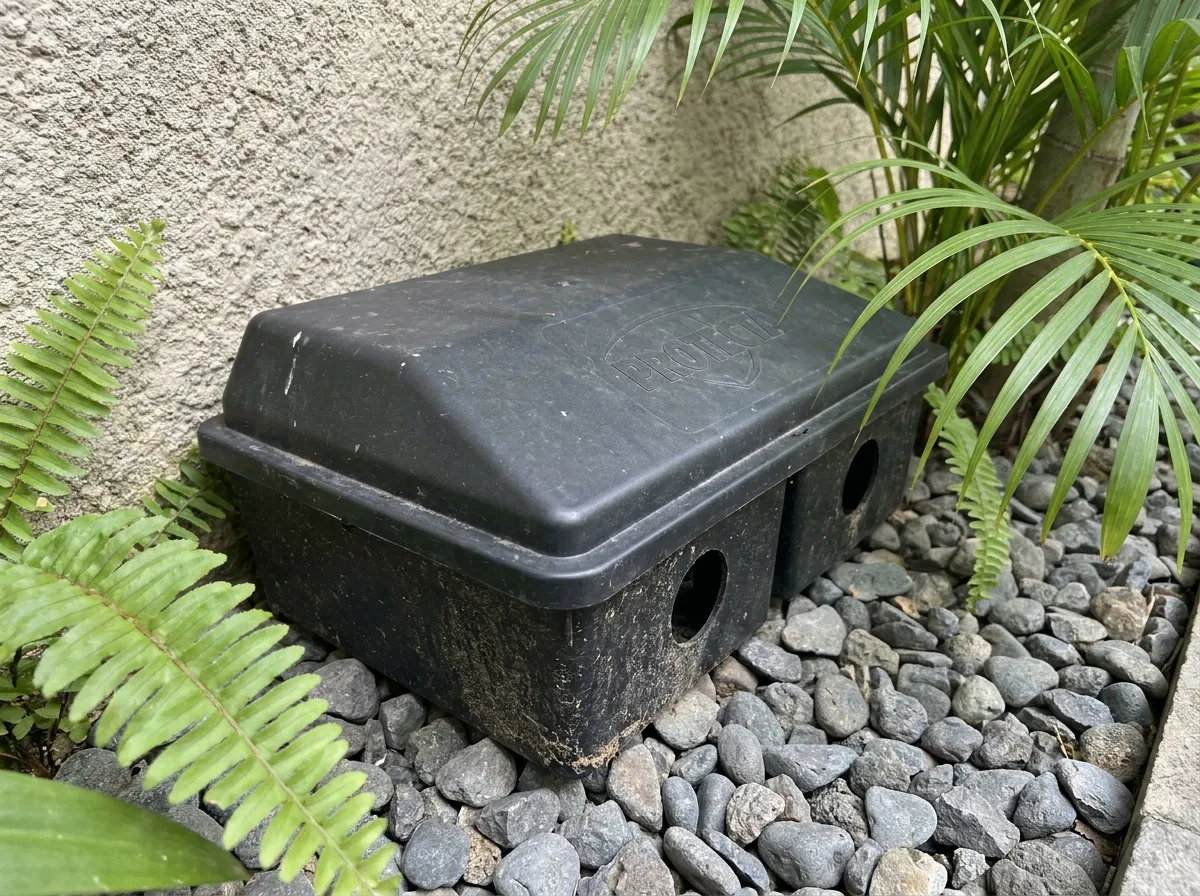
Tamper-resistant bait stations placed around the property perimeter at rodent run locations. Stations protect bait from weather, prevent access by non-target animals, and allow monitoring of bait consumption. For ongoing perimeter management — particularly for villas adjacent to rice fields or gardens — monthly bait station maintenance prevents populations from building to infestation level.
Interior Trapping
For established interior infestations, snap traps or electronic traps placed at rodent run locations. Trapping is faster-acting than bait for existing interior populations and eliminates the risk of dead rodents in inaccessible locations that generate odour. We place, check and remove traps within a defined treatment period.
After-Treatment Follow-Up
Rat activity monitoring at entry points and bait stations 2 weeks after initial treatment confirms whether the population has been controlled. Follow-up included in all rodent treatment jobs — we don't consider the job complete until activity is confirmed below threshold.
Our Rodent Control Process — Step by Step
Perimeter survey
We walk the whole property looking for entry points, runs, droppings and gnaw marks, and identify the food and harbourage sources drawing rats in. This is the step previous contractors usually skip.
Entry point sealing
We seal pipe penetrations, drain ends, door gaps and wall cracks with stainless mesh or hydraulic cement. Without this, baiting is an endless maintenance contract rather than a fix.
Bait stations & trapping
Tamper-resistant exterior bait stations at run locations for perimeter control, plus snap or electronic traps indoors for fast removal of any rats already inside.
Follow-up confirmation
We return about two weeks later to check activity at entry points and stations. We don't close the job until activity is confirmed below threshold.
Pricing
FAQ
Why do rats keep coming back to my Bali villa?
Entry points are the most common cause of persistent rodent problems. If the access gap isn't identified and sealed, bait treatment reduces the current population but the location continues to attract new rodents. Survey and seal before baiting.
What attracts rats to villas in Canggu and Seminyak?
Primarily food sources: bird feeders, composting areas, accessible garbage storage, fruit fallen from garden trees. Secondary: harbourage — dense garden planting close to the building, spaces under decking, open storage sheds. Removing attractants alongside treatment gives lasting results.
Coverage
Related services: Cockroach control · Ant & termite control · General pest programs.
Rat Problem in Bali?
Describe what you're seeing — where, when, evidence of entry. We'll advise the fastest resolution approach.
WhatsApp for Rodent Control