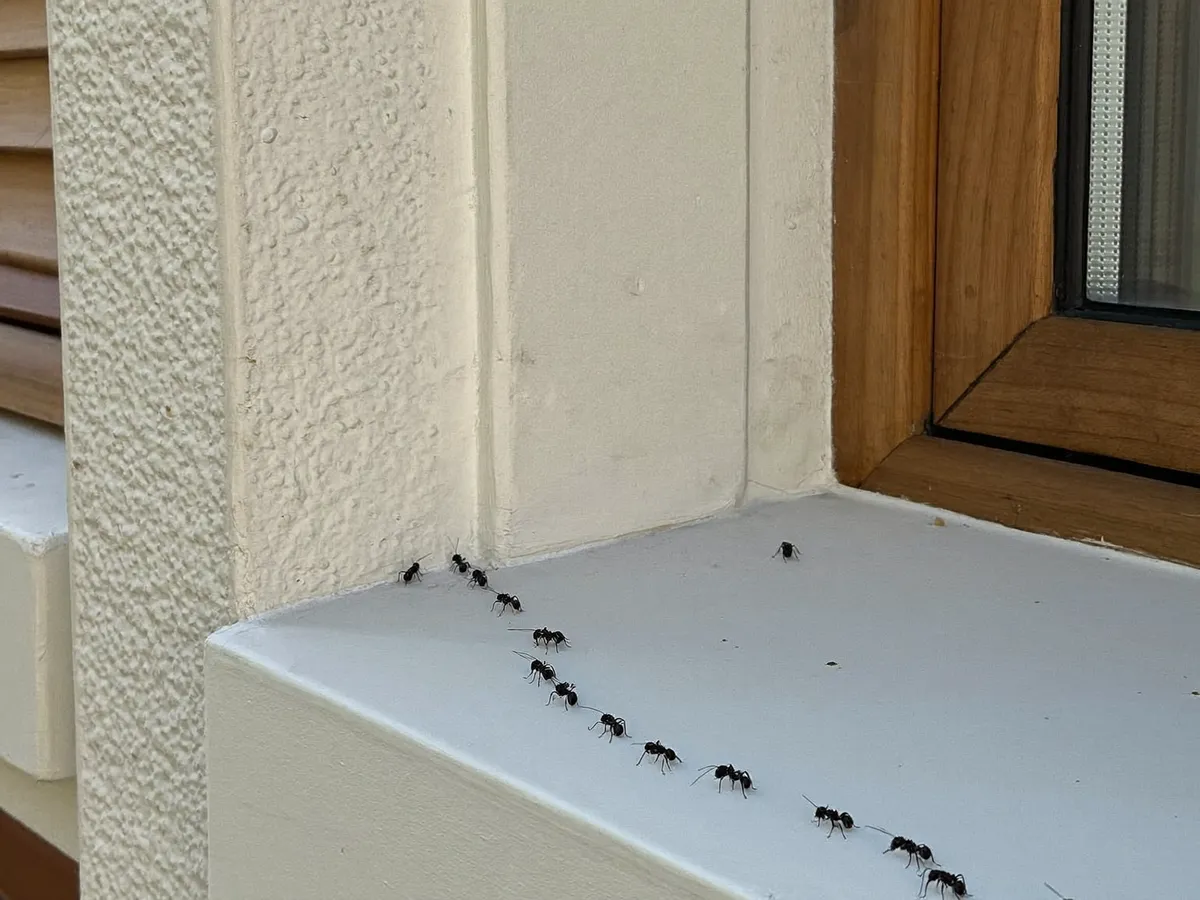
Ants and termites in Bali villas are connected problems — both are social insects with large underground colonies that extend well beyond the visible activity point. The visible ants in your kitchen are a scout trail from a colony that may be 10–15 metres away in the garden. The effective treatment approach targets the colony through bait carried by foragers — not just spray that kills the scouts you can see. In this guide I want to explain the correct treatment approach for both ant and termite problems in Bali's tropical conditions.
Ant Control
Sweet-Feeding Ants
Sugar ants and ghost ants — the most common species in Bali villas — forage for sweet food sources. Gel bait containing sugar attractant carried back to the colony achieves colony kill within 1–3 weeks. Spray treatment kills foragers but doesn't penetrate to the colony.
Protein-Feeding Ants
Fire ants and larger black ant species feed on protein. Require protein-based bait, which is different from the sugar bait used for sweet-feeding ants. Identification of the ant species before treatment selection is essential — wrong bait type is ineffective regardless of application quality.
If You Suspect Termites Instead
Termites are the more serious of the two problems because the damage is structural and usually hidden until it is advanced. The species we deal with most in Bali are subterranean termites, which nest in the soil and reach timber through mud tubes built up walls and foundations, and drywood termites, which live inside the timber itself and leave small piles of pellet-like frass below infested wood. Bali's combination of constant humidity, abundant untreated hardwood and timber that often sits in direct contact with soil makes villas here particularly vulnerable, and a colony can do significant damage to a roof structure or decking within a single season.
Termite activity is a different job from ants — it needs its own inspection, soil-barrier or baiting programme rather than surface colony treatment. If you suspect termites rather than ants (mud tubes, hollow timber, discarded wings), mention it when you message us and we will point you to the right treatment plan instead of selling you an ant service that will not solve it.
How We Treat Ant Colonies — Step by Step
Identification
We confirm the species before choosing any product. Ghost ants, fire ants, carpenter ants and termites all require different treatments — getting this wrong is the single most common reason DIY and cheap treatments fail.
Source & entry survey
We trace trails back toward the nest and inspect timber, soil contact points and moisture sources. For termites we look for mud tubes, frass and hollow-sounding wood.
Targeted bait or barrier
Species-matched gel or granular bait for ants; liquid barrier, bait stations or timber injection for termites. The aim is always colony-level kill, not surface knockdown.
Follow-up check
We return to confirm the trail or activity has stopped and the colony is gone. If anything remains active we re-treat within the same job.
Pricing
FAQ
Can you tell what ant species I have from a photo?
Often yes — a clear photo of the ants and the trail sent over WhatsApp is usually enough for us to identify the feeding type and bring the correct bait, which saves a return visit.
How long until ants disappear after baiting?
For most sweet-feeding species you'll see the trail thin out within a few days and the colony collapse within one to three weeks as workers carry bait back to the nest. Resist cleaning away the bait or spraying the trail during this period — that stops the bait reaching the queen.
Do I need a termite inspection if I haven't seen any?
For older timber villas, or before buying or renovating a property, a baseline inspection is worthwhile because subterranean termites work out of sight. Catching activity early is far cheaper than repairing structural damage later.
Coverage
Related services: Cockroach control · Rodent control · General pest programs.
Got an Ant Problem?
Tell us what species you're seeing and where. We'll advise the correct bait type and treatment approach.
WhatsApp Us